EN
EN
 AR
AR
 HR
HR
 CS
CS
 NL
NL
 FR
FR
 DE
DE
 IT
IT
 JA
JA
 KO
KO
 NO
NO
 PL
PL
 PT
PT
 RO
RO
 RU
RU
 ES
ES
 SV
SV
 TL
TL
 ID
ID
 VI
VI
 MT
MT
 TH
TH
 TR
TR
 AF
AF
 MS
MS
 AZ
AZ

Pressure Gauge Selection Guide
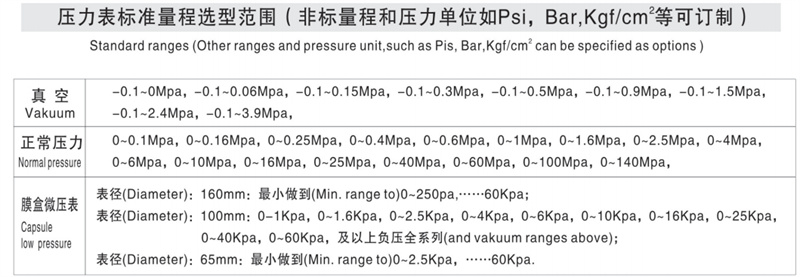
1. Choice of Pressure Gauge Range
① For steady pressure measurement, the maximum operating pressure should not exceed 2/3 of the measurement range.
② For high-pressure measurement, the maximum operating pressure should not exceed 3/5 of the measurement range.
③ To ensure measurement accuracy, the minimum operating pressure should not fall below 1/3 of the measurement range.
2. Choice of Pressure Gauge Type
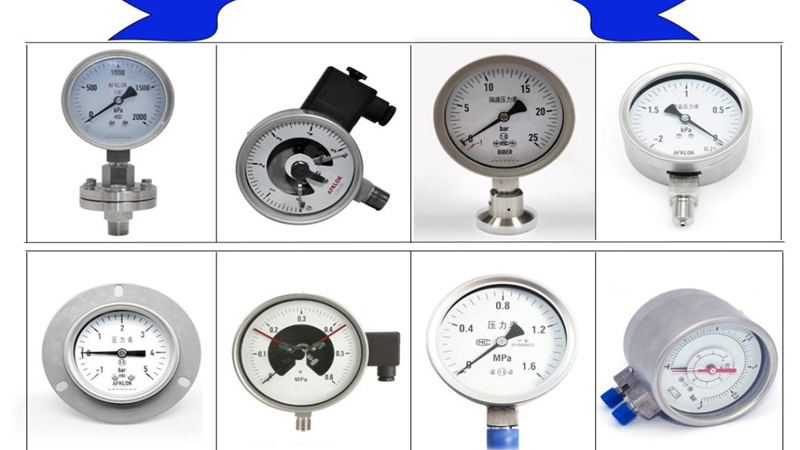
① For special media, dedicated pressure gauges are required. For example, ammonia pressure gauges for ammonia, oxygen pressure gauges for oxygen, hydrogen pressure gauges for hydrogen, and acetylene pressure gauges for acetylene, etc.
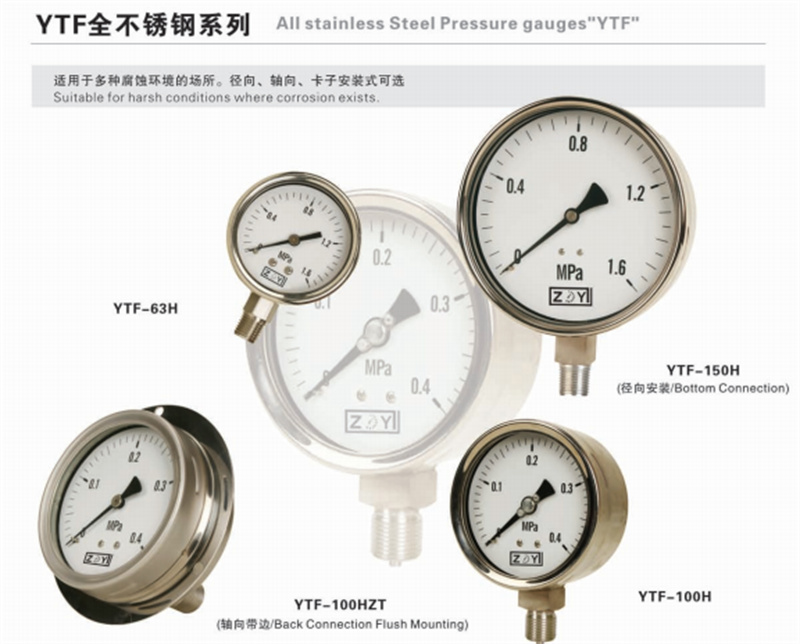
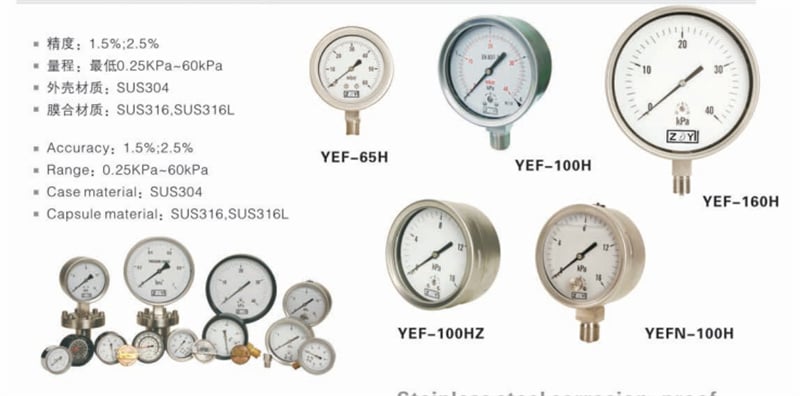
② For mildly corrosive media and environments with corrosive gases, stainless steel pressure gauges should be selected.
③ For measuring pressure in highly viscous, crystallizing, highly corrosive, high-temperature liquids or gases, or media containing solid suspensions, diaphragm pressure gauges should be used.
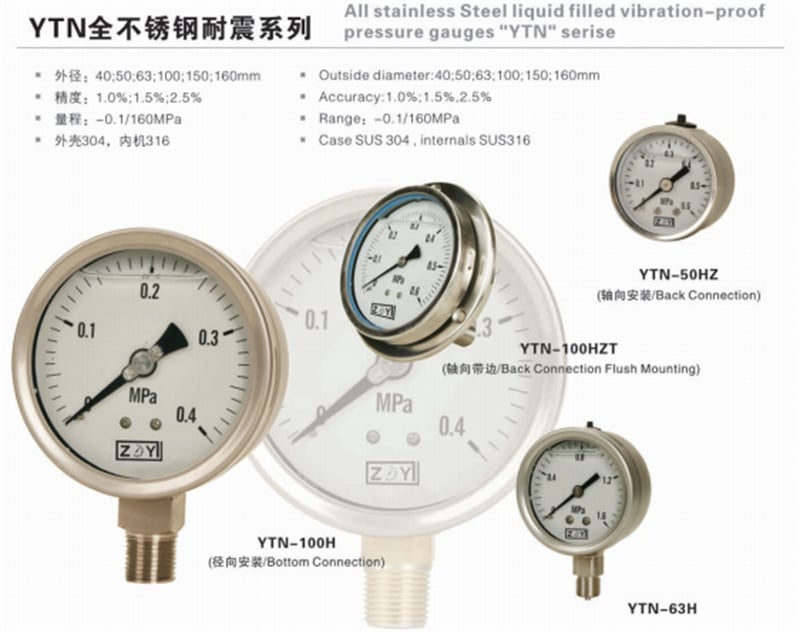
④ For pressure measurement in pulsating media and mechanically vibrating environments, vibration-resistant pressure gauges are recommended.
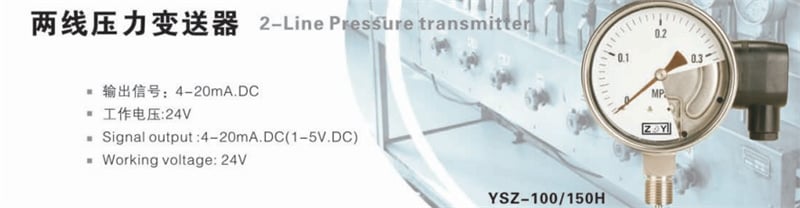
⑤ When remote transmission is required, remote transmission pressure gauges can be selected, with signal types including current, resistance, and voltage.
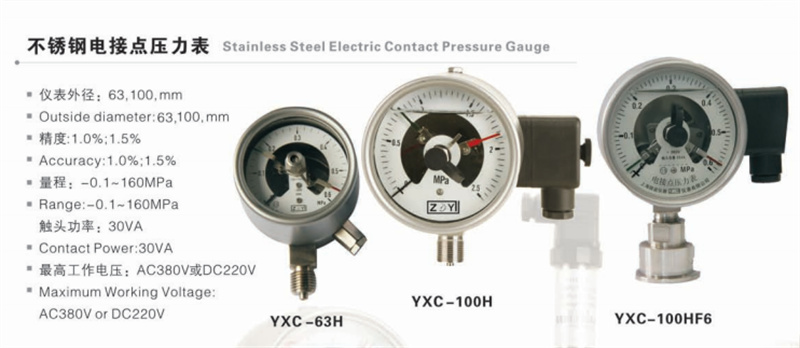
⑥ For control and protection requirements, electrical contact pressure gauges should be used.
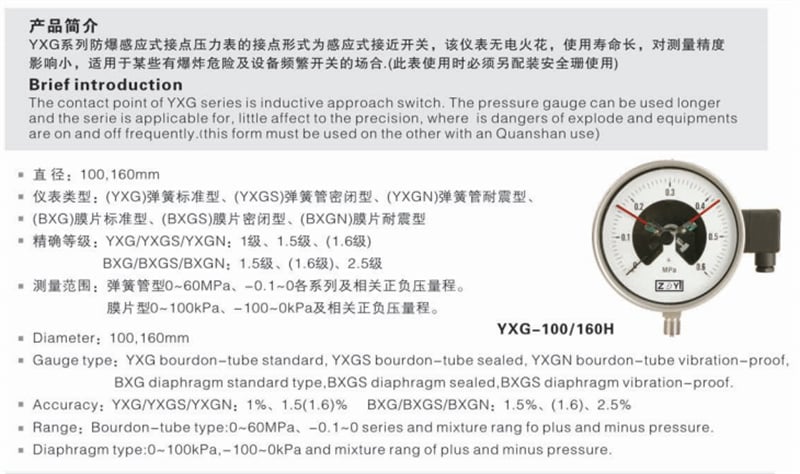
⑦ In explosive environments, explosion-proof pressure gauges, such as explosion-proof electrical contact pressure gauges, must be used.
3. Where is it used?
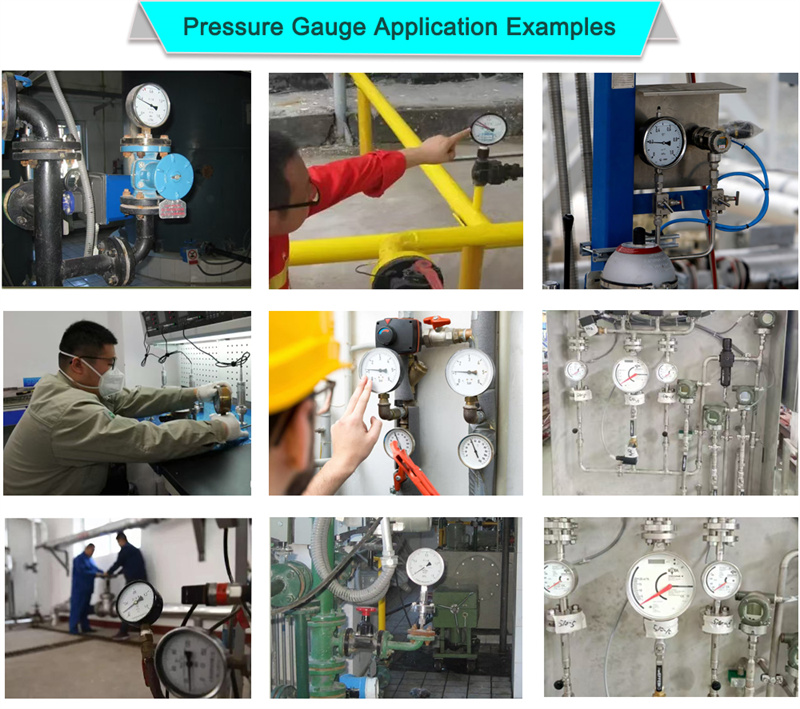
1. Petrochemical Industry: Monitoring pressure in pipelines, storage tanks, and reactors.
2. Energy: Steam and water pressure monitoring in power plants and boiler systems.
3. Manufacturing: Pneumatic and hydraulic systems, compressed air systems, industrial lubrication systems.
4. Medical: Gas pressure control in medical equipment.
5. Food and Beverage: Pressure control in production processes, often using sanitary pressure gauges.