 EN
EN
 AR
AR
 HR
HR
 CS
CS
 NL
NL
 FR
FR
 DE
DE
 IT
IT
 JA
JA
 KO
KO
 NO
NO
 PL
PL
 PT
PT
 RO
RO
 RU
RU
 ES
ES
 SV
SV
 TL
TL
 ID
ID
 VI
VI
 MT
MT
 TH
TH
 TR
TR
 AF
AF
 MS
MS
 AZ
AZ

Pressure Gauge Accessory Radiators: A Complete Guide
Pressure gauge radiators (also known as "snubbers" or "cooling elements") are compact, essential accessories installed between high-temperature process media (e.g., gas, liquid) and pressure gauges.
Typically constructed from durable materials like 304 stainless steel, they come in three primary designs:
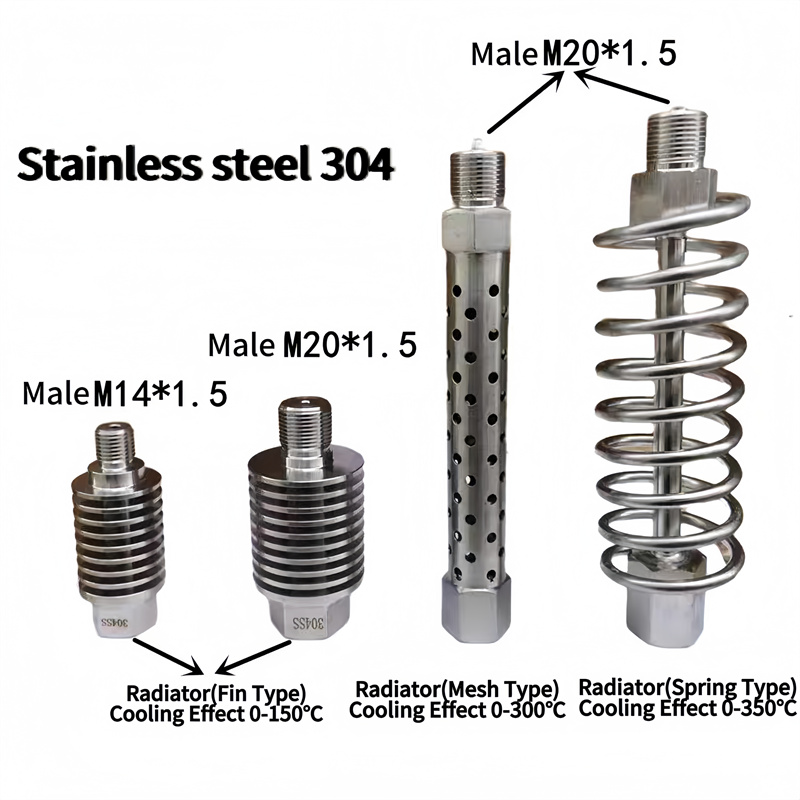
Fin Type: Features stacked metal fins (compatible with threads like Male M141.5/M201.5).
Mesh Type: A hollow cylinder with perforated walls (optimized for airflow).
Spring Type: A coiled metal spring structure (maximizes heat dissipation).
Core Functions of Pressure Gauge Radiators
These components serve three critical roles in pressure measurement systems:
• Cool High-Temperature Media
They reduce the temperature of process fluids/gases before they reach the gauge, protecting sensitive internal parts (e.g., plastic, glass) from overheating.
• Dampen Pressure Spikes
Their restrictive flow paths slow turbulent media, preventing sudden pressure surges from damaging the gauge’s sensing element.
• Extend Gauge Lifespan
They shield gauges from corrosion, thermal shock, and mechanical wear caused by harsh operating conditions.
How to Choose the Right Pressure Gauge Radiator
Selecting a radiator depends on four key system factors:
• Match Process Temperature
Pick a radiator rated for your medium’s operating range:
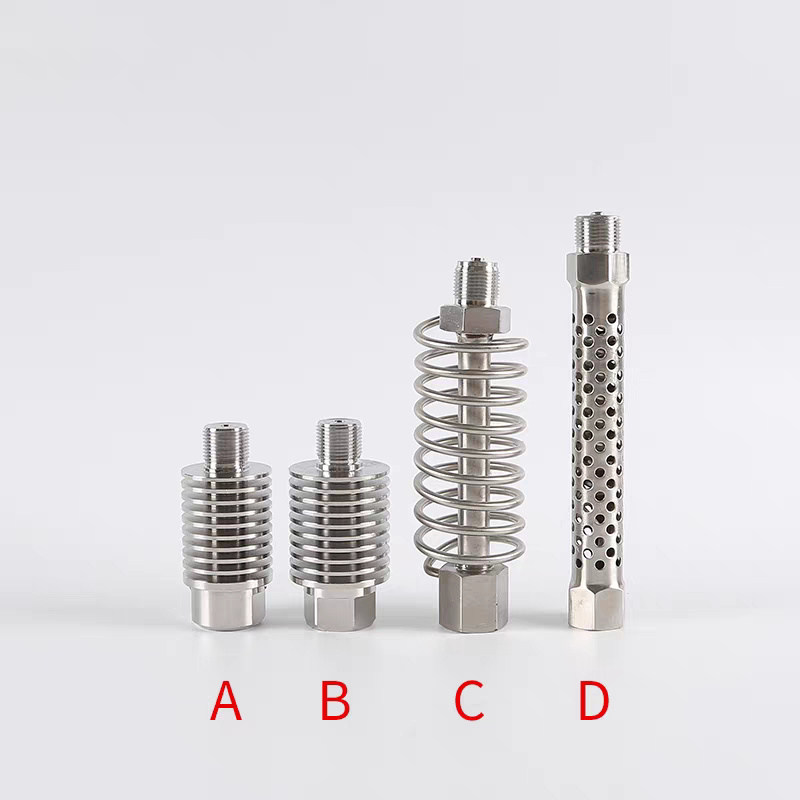
Fin Type: Ideal for low-to-moderate temperatures (0–150°C, e.g., warm water, low-pressure air).
Mesh Type: Suitable for medium temperatures (0–300°C, e.g., hot oil, low-pressure steam).
Spring Type: For high-temperature environments (0–350°C, e.g., industrial exhaust, high-pressure steam).
• Verify Thread Compatibility
Ensure the radiator’s thread size (e.g., Male M141.5 for smaller gauges, Male M201.5 for standard industrial gauges) matches both the pressure gauge and process connection—mismatches cause leaks or poor fitting.
• Consider the Process Medium
Corrosive media (e.g., chemicals): Use 304/316 stainless steel radiators (avoid non-metallic materials).
Viscous fluids (e.g., heavy oil): Choose designs with large flow paths (e.g., Spring Type) to prevent clogging (Fin Type may trap viscous material).
• Evaluate Pressure Spike Risks
Frequent surges (e.g., hydraulic lines): Prioritize radiators with tight flow restrictions (e.g., Mesh Type) to dampen spikes.
Steady pressure (e.g., static liquid tanks): Fin Type works efficiently with minimal flow resistance.
By aligning these factors with your system’s needs, you’ll select a radiator that protects your gauge and ensures reliable, long-term measurements.