 EN
EN
 AR
AR
 HR
HR
 CS
CS
 NL
NL
 FR
FR
 DE
DE
 IT
IT
 JA
JA
 KO
KO
 NO
NO
 PL
PL
 PT
PT
 RO
RO
 RU
RU
 ES
ES
 SV
SV
 TL
TL
 ID
ID
 VI
VI
 MT
MT
 TH
TH
 TR
TR
 AF
AF
 MS
MS
 AZ
AZ
The Application of Specialty Gases in the LED Optoelectronics Industry
Epitaxy is widely recognized as the core step in LED chip manufacturing. The quality of the epitaxial process directly determines the luminous efficiency, wavelength uniformity, and service life of LED chips. Supporting this critical process is a highly precise specialty gas system.
As new display technologies such as Mini LED and Micro LED develop rapidly, the demands on manufacturing environments and process materials continue to rise. The purity, stability, and supply reliability of specialty gases have become key factors constraining industrial upgrading.
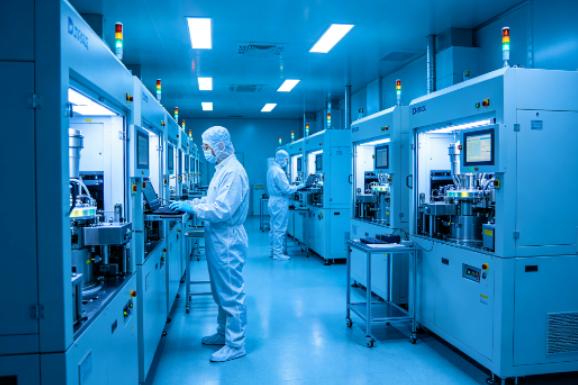
Epitaxy: The Starting Point of LED Chip "Growth"
In the LED industry chain, epitaxial technology, equipment, and materials are the three pillars of epitaxial wafer manufacturing. MOCVD (Metal-Organic Chemical Vapor Deposition) is currently the mainstream technology for growing epitaxial wafers and an established industrial process, now the fundamental technique for producing most optoelectronic materials.
The core principle of MOCVD is to deliver organic metal compounds and hydrides containing specific elements as precursors into a reaction chamber via carrier gas. Chemical reactions occur on a high-temperature substrate, growing a single-crystal epitaxial layer. This process places extremely high demands on gas purity, flow accuracy, and stability.
The Core Role of Specialty Gases in Epitaxial Growth
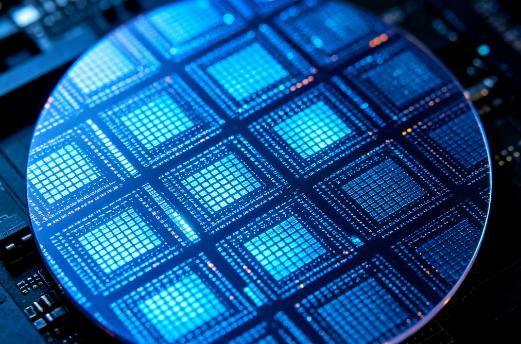
Ultra-high-purity specialty gases serve different functions in epitaxy:
Reaction gases:
● High-purity arsine (AsH3), phosphine (PH3), and ammonia (NH3) are the main reaction gases, supplying Group V elements (arsenic, phosphorus, nitrogen) that combine with Group III elements to form compound semiconductor materials.
Doping gases:
● Silane (SiH4) enables N-type doping in gallium arsenide production, precisely controlling the electrical properties of epitaxial layers. Hydrogen chloride (HCl) and chlorine (Cl2) are commonly used as etch gases for fine etching and surface treatment.
Carrier gases:
● Argon (Ar), nitrogen (N2), and helium (He) transport precursors to the reaction chamber while maintaining an inert process environment.
Organic sources:
● Key organic sources include trimethylgallium (TMGa), trimethylindium (TMIn), trimethylaluminum (TMAl), diethylzinc (DEZn), and bis(cyclopentadienyl)magnesium (Cp2Mg), which provide Group III elements and P-type dopants.
Purity: The Key Variable Determining LED Quality
As compound semiconductor technology matures and industrialization accelerates, the development of ultra-pure specialty gases and organic sources has advanced in several areas:
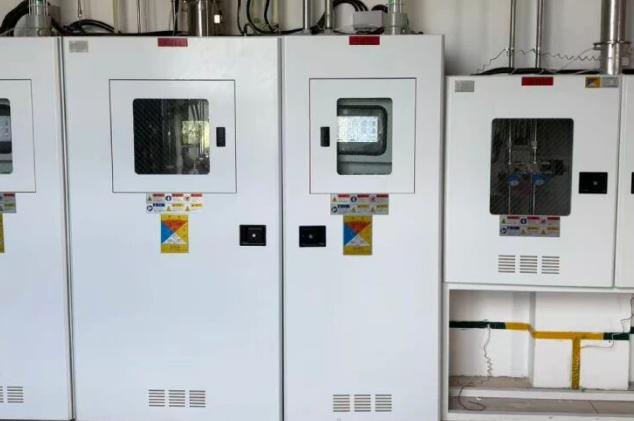
● Deep purification technology using multi-stage processes to keep impurities at extremely low levels.
● Clean treatment of cylinder and pipeline inner walls via electropolishing and electrochemical polishing to prevent secondary contamination during gas delivery.
● Trace impurity detection advancing from ppm and ppb levels toward ppt levels.
● Continuous improvement in the purification and analysis of metal impurities at the ppt level.
● Exhaust gas treatment with alarm systems and integrated pollution-free gas supply for safety and environmental compliance.
● High-precision formulation of specialty gas mixtures to meet the exact needs of different processes.
● Particle filtration technology, including testing and filtration of particles as small as 0.01–0.002 μm.
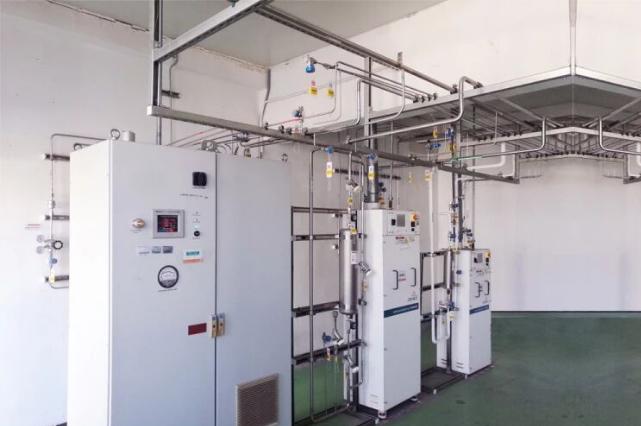
Take ammonia, the most widely used gas in the LED industry: its purity has progressed from electronic grade (5N) to 5.5N and 5.7N, and now to "blue ammonia" (6.4N), widely used in gallium nitride production.
Because impurities such as moisture and hydrocarbons are strictly limited, yet most specialty gases are chemically active and difficult to keep pure, gas purity and the reliability of supply systems have become top priorities for semiconductor manufacturers.