 EN
EN
 AR
AR
 HR
HR
 CS
CS
 NL
NL
 FR
FR
 DE
DE
 IT
IT
 JA
JA
 KO
KO
 NO
NO
 PL
PL
 PT
PT
 RO
RO
 RU
RU
 ES
ES
 SV
SV
 TL
TL
 ID
ID
 VI
VI
 MT
MT
 TH
TH
 TR
TR
 AF
AF
 MS
MS
 AZ
AZ

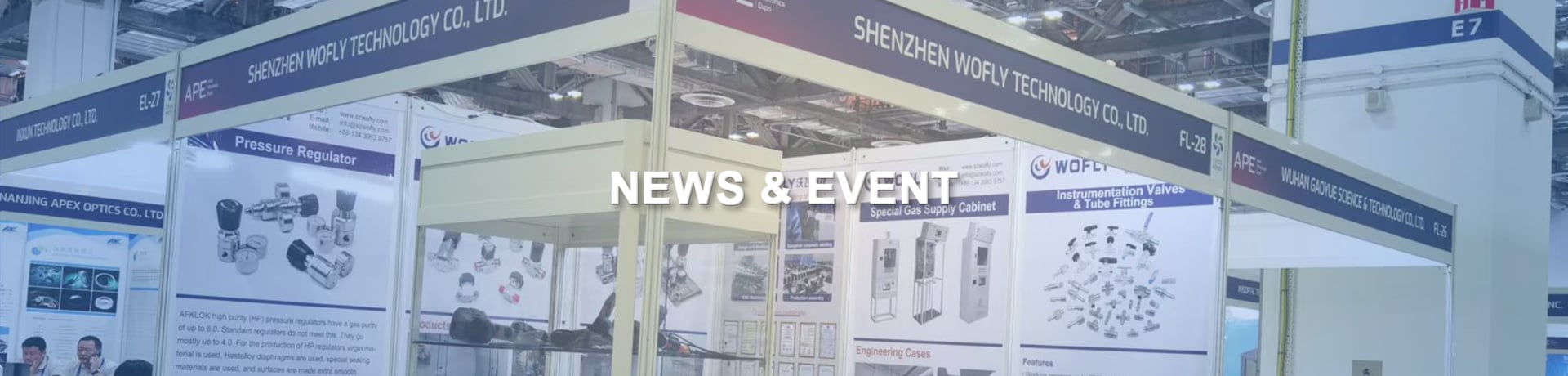
Industrial Pressure Gauge Selection: Oil-Filled or Non-Oil-Filled?
As a core component in industrial production and engineering projects, pressure gauges play an irreplaceable role in real-time pressure monitoring, equipment safety protection, and process optimization. Widely used in fields such as petroleum, chemical industry, machinery manufacturing, construction engineering, and water conservancy projects, they are essential equipment for ensuring the stable operation of industrial systems and the safety of production processes. For foreign trade purchasers and overseas industrial enterprises, choosing between oil-filled and non-oil-filled pressure gauges has become a key decision in procurement, as the two types differ significantly in performance, cost, and application scenarios. This article will systematically analyze the characteristics, advantages, and applicable scenarios of both types to help global buyers make more rational choices.
Oil-Filled Pressure Gauges: Shockproof and Durable, with Higher Cost
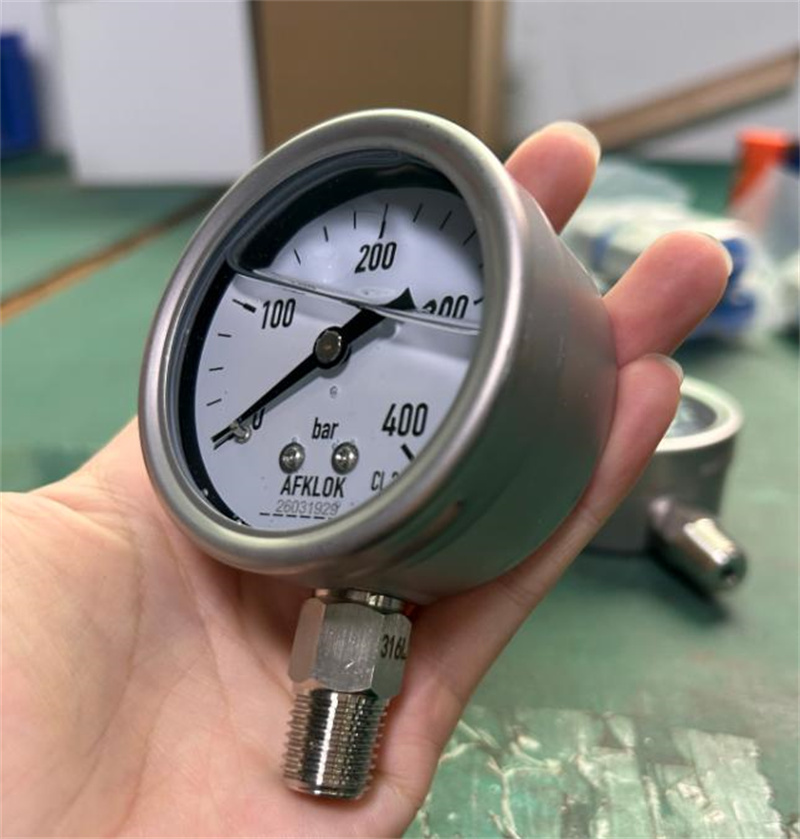
Oil-filled pressure gauges, also known as shockproof pressure gauges, are specially designed for harsh working environments. Their core feature is that the gauge case is filled with inert damping fluid (usually glycerin or silicone oil), which isolates the internal mechanical transmission components from the external environment, achieving triple protection of shock resistance, impact resistance, and corrosion resistance. The most prominent role of the filled oil is shock absorption and buffering: in industrial sites with severe vibration (such as around compressors, machine tools, and construction machinery), the damping fluid can absorb vibration energy and buffer mechanical impact, avoiding violent jitter of the pointer or wear of internal components, ensuring stable and accurate pressure readings.
However, the advantages of oil-filled pressure gauges also bring certain limitations. Due to the addition of damping fluid and the need for a more sealed gauge case design, their production cost is relatively higher, and the overall weight is heavier than non-oil-filled pressure gauges. This not only increases the procurement cost for buyers but also brings certain inconvenience to transportation and installation, especially in scenarios where weight and installation space are strictly limited.
Non-Oil-Filled Pressure Gauges: Cost-Effective and Lightweight, Suitable for Stable Environments
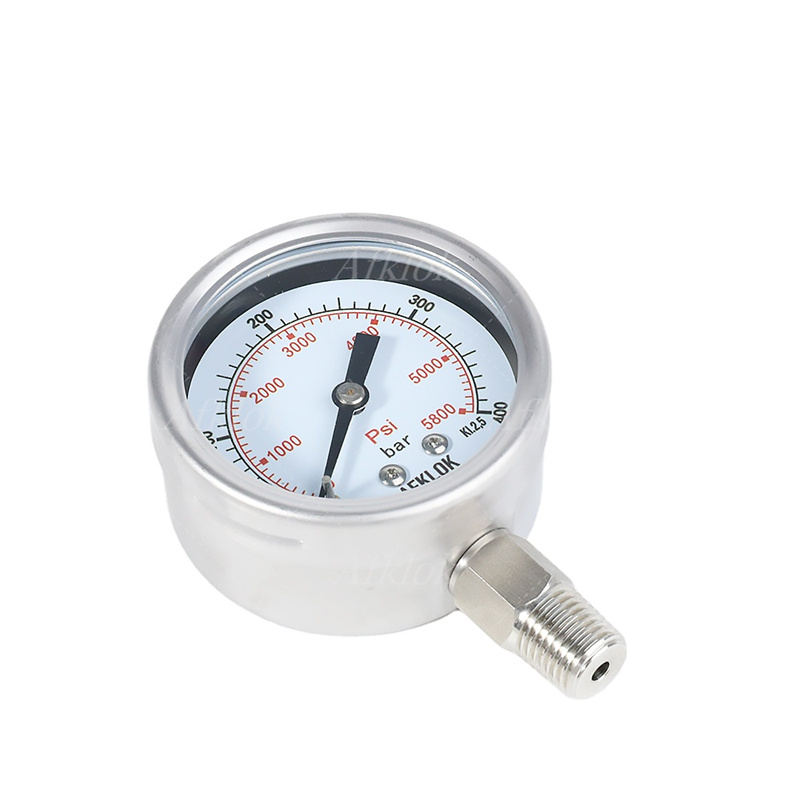
Non-oil-filled pressure gauges, also known as ordinary pressure gauges, are the most commonly used type of pressure gauge in industrial production. They have a simple structure, consisting of a pressure guiding system, a gear transmission mechanism, a pointer, and a gauge case, without filling any damping fluid inside. Compared with oil-filled pressure gauges, non-oil-filled pressure gauges have two obvious advantages: lower price and lighter weight.
It should be noted that non-oil-filled pressure gauges do not have the shockproof function of damping fluid. In working environments with severe vibration or large pressure fluctuations, the pointer will shake violently, making it difficult to read the accurate pressure value, and long-term vibration will also accelerate the wear of internal components, reducing the service life and measurement accuracy of the gauge. Therefore, non-oil-filled pressure gauges are more suitable for stable working environments with little vibration, small pressure fluctuations, and no special corrosion requirements, such as ordinary water supply and drainage pipelines, indoor electrical equipment, and light industrial production scenarios.
Selection Guide: How to Choose Between Oil-Filled and Non-Oil-Filled Pressure Gauges?
For foreign trade purchasers and overseas industrial enterprises, the choice between oil-filled and non-oil-filled pressure gauges should not only consider the cost factor but also closely combine the actual working environment and use requirements. Here are some practical suggestions for selection:
Choose oil-filled pressure gauges if: the working site has severe vibration (such as around machinery and equipment), the pressure of the measured medium fluctuates greatly, or the working environment is harsh (high humidity, dust, corrosion); the accuracy and stability of pressure measurement are highly required, and the service life of the instrument needs to be extended; the additional cost and weight can be accepted.
Choose non-oil-filled pressure gauges if: the working environment is stable, with little vibration and small pressure fluctuations; the procurement budget is limited, and cost control is the primary consideration; the installation space is narrow or the load-bearing capacity is limited, requiring lightweight instruments; the measurement accuracy requirements are not particularly high, and ordinary industrial monitoring needs can be met.
Conclusion
Both oil-filled and non-oil-filled pressure gauges have their own unique advantages and applicable scenarios, and there is no absolute "better" option, only the "more suitable" one for specific needs. As a key product in industrial foreign trade, the rational selection of pressure gauges is crucial to reducing procurement costs, ensuring production safety, and improving operation efficiency. With the continuous development of the global industrial market, the demand for pressure gauges is also constantly upgrading. Whether it is the shockproof and durable oil-filled type or the cost-effective and lightweight non-oil-filled type, they can meet the diverse needs of different industrial fields.
For overseas purchasers who need to purchase pressure gauges, it is recommended to fully communicate with suppliers, clarify their own working environment, measurement requirements, and budget constraints, and choose the most suitable product type. We will continue to provide high-quality pressure gauge products and professional selection advice for global industrial customers, helping you achieve more efficient and safe production operations.