 EN
 AR
 HR
 CS
 NL
 FR
 DE
 IT
 JA
 KO
 NO
 PL
 PT
 RO
 RU
 ES
 SV
 TL
 ID
 VI
 MT
 TH
 TR
 AF
 MS
 AZ

WR1000 Ultra-High Pressure Reducing Regulator: Technical Guide and Engineering Specifications
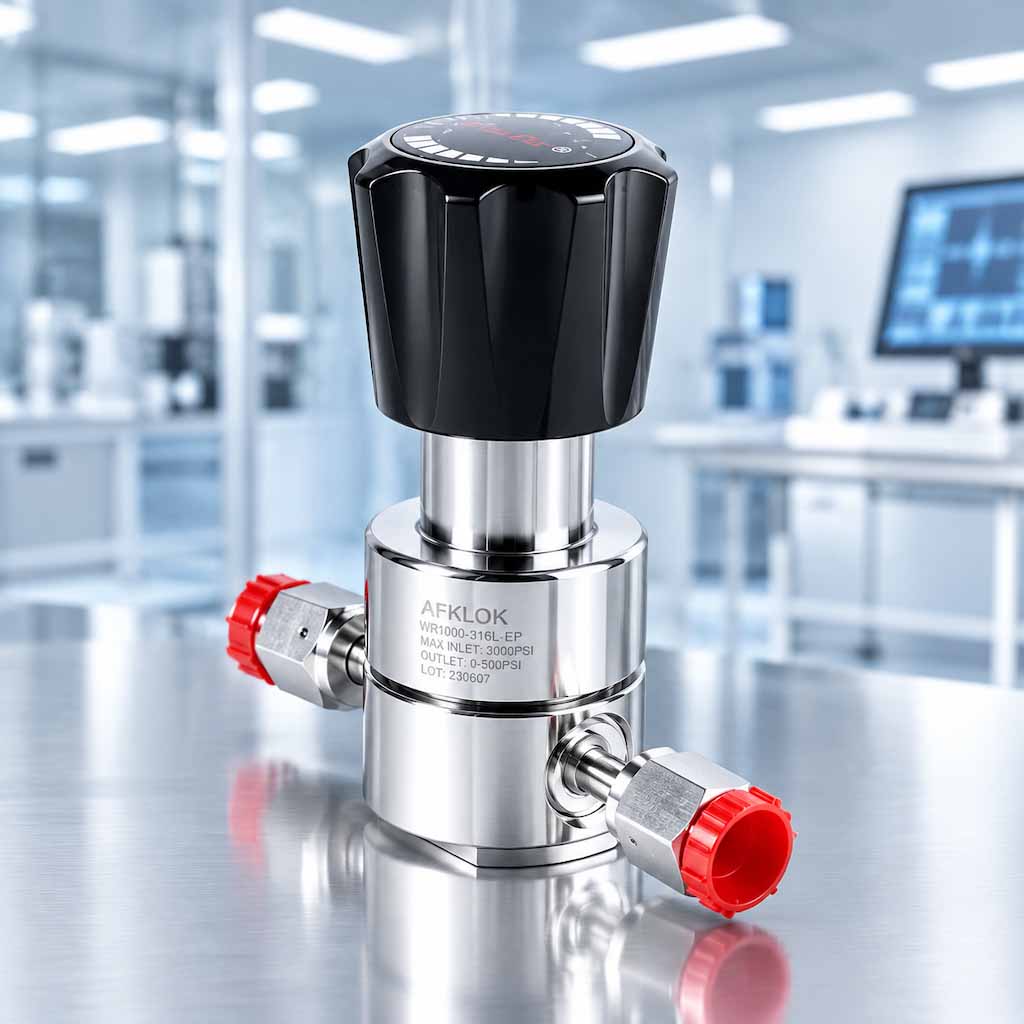
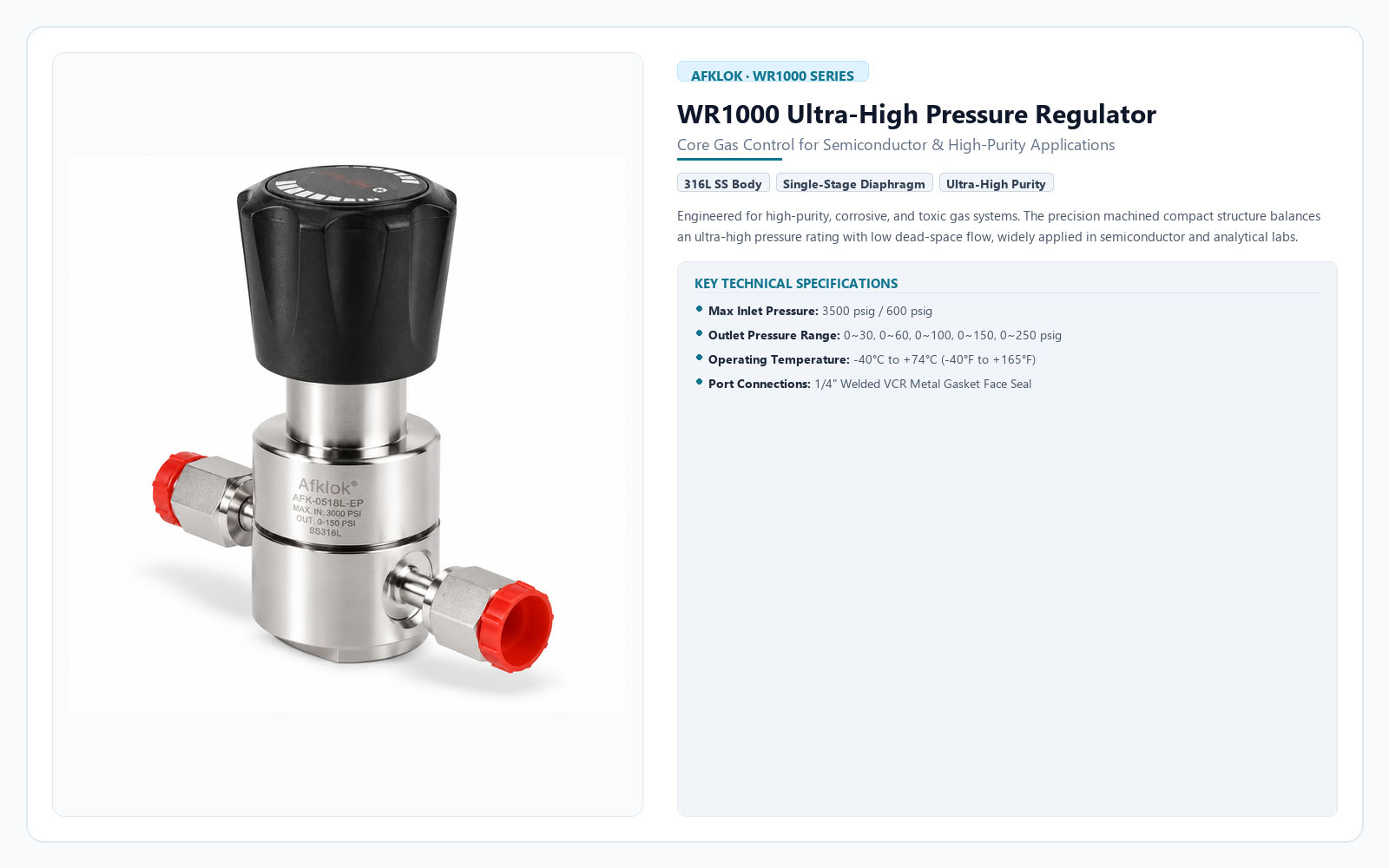
In high-tech industries such as semiconductor wafer fabrication, photovoltaic cell manufacturing, and analytical chemistry, precision gas delivery systems require components that operate under extreme pressure conditions without compromising gas purity or system safety. The WR1000 Ultra-High Pressure Reducing Regulator by AFKLOK is an engineered single-stage diaphragm pressure regulator designed to handle corrosive, toxic, and ultra-high purity (UHP) gases. Built with dual inlet pressure ratings of 600 psig and 3500 psig, a choice of 316L stainless steel or Hastelloy C-276 bodies, and an electropolished internal surface finish down to Ra 0.25 µm (10 µin), the WR1000 delivers rock-solid downstream pressure stability and ultra-clean fluid containment. This technical guide explores the architectural features, performance parameters, flow dynamics, ordering codes, and critical application environments of the WR1000 pressure reducing regulator.
1. Introduction to Ultra-High Purity Pressure Regulation
Ultra-high purity gas distribution lines cannot tolerate particulate shedding, dead volume entrapment, or micro-leakage. When working with aggressive cylinder gases—such as silane, phosphine, hydrogen chloride, or high-pressure nitrogen—the pressure regulator serves as the critical primary control element. The AFKLOK WR1000 ultra-high pressure reducing regulator was developed specifically to solve the dual challenge of handling high inlet cylinder pressures up to 3500 psig (241 bar) while accurately stepping down pressure to sensitive downstream processes with outlet ranges spanning from 030 psig up to 0250 psig.
Unlike conventional industrial regulators that use elastomer diaphragms or threaded internal cavities that harbor contaminants, the WR1000 incorporates a specialized tied-diaphragm or single-stage metallic diaphragm architecture. This design eliminates wetted threads and elastomer seals in the primary gas stream, drastically reducing the risk of outgassing and moisture entrapment. Engineers selecting pressure regulation equipment for mission-critical gas cabinets, valve manifold boxes (VMB), and research laboratory manifolds rely on the WR1000 to deliver consistent flow rates without pressure creep or thermal degradation across operating temperatures from -40°C to +74°C (-40°F to +165°F).
2. Core Engineering Features and Materials of Construction
The durability and performance of an ultra-high purity pressure regulator depend directly on metallurgy, seal selection, and surface topography. The WR1000 combines premium corrosion-resistant alloys with high-performance fluoropolymers to ensure long service life in demanding environments.
2.1 316L Stainless Steel and Hastelloy C-276 Body Selection
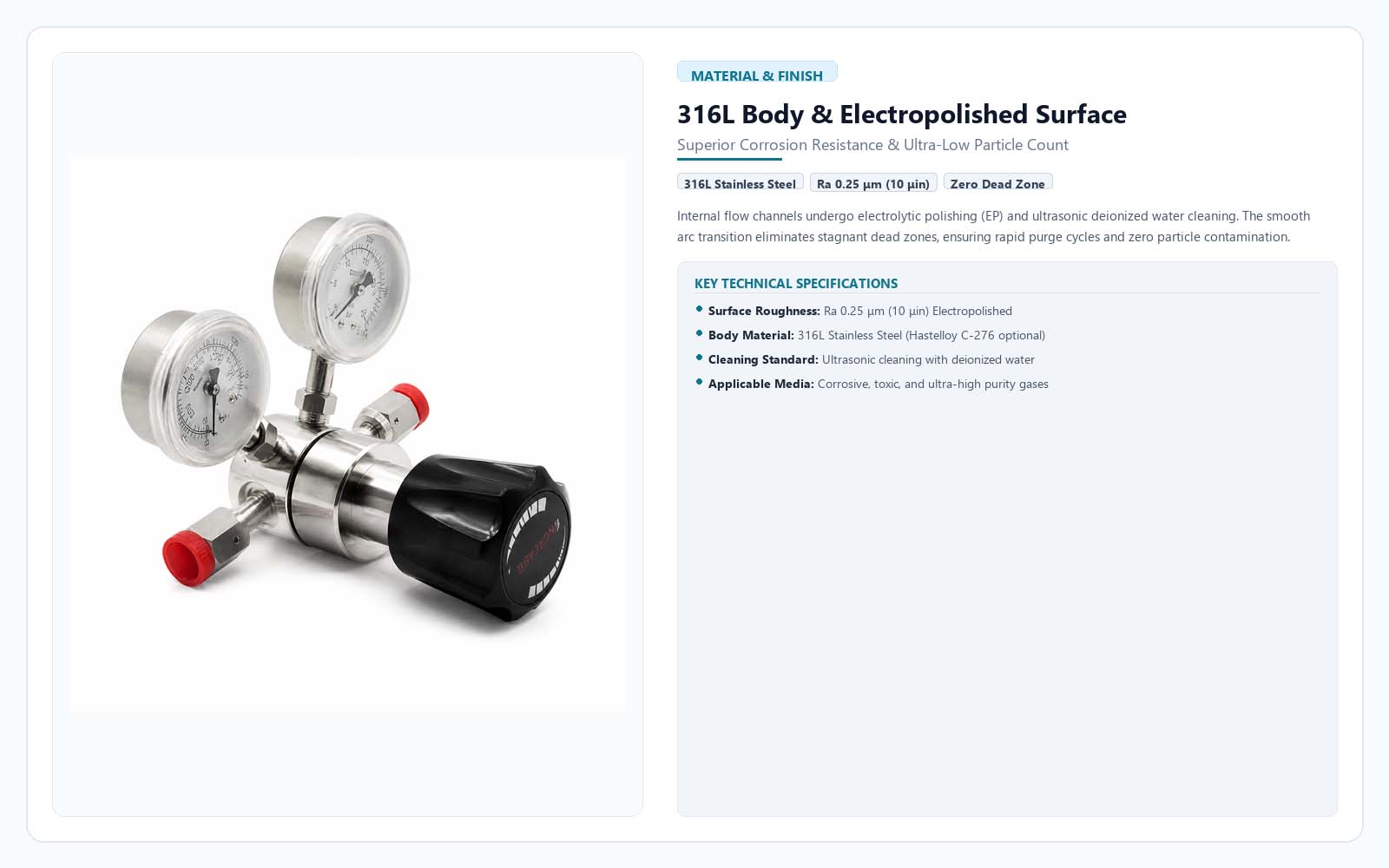
The primary regulator body is fabricated from forged 316L stainless steel (ordering code 6L), offering high structural strength, excellent weldability, and resistance to general chemical attack. For extremely harsh chemical environments involving halogenated compounds, wet chlorine, or aggressive acid vapors, AFKLOK offers an optional Hastelloy C-276 body (ordering code HC). Hastelloy C-276 provides superior nickel-molybdenum-chromium resistance against pitting, crevice corrosion, and stress corrosion cracking under elevated pressure conditions.
2.2 Hastelloy Diaphragm and PCTFE Valve Seat Integrity
A defining mechanical feature of the WR1000 is its Hastelloy diaphragm. Hastelloy diaphragms exhibit high flex life, resistance to cyclic fatigue, and corrosion resistance compared to standard stainless steel diaphragms. The valve seat is manufactured from polychlorotrifluoroethylene (PCTFE), a fluoropolymer prized for its compressive creep resistance, low gas permeability, and chemical inertness. The combination of a Hastelloy diaphragm and a PCTFE soft seat creates an impervious seal that prevents internal seat leakage even during prolonged shutoff cycles under maximum inlet differential pressures.
2.3 Electropolished Flow Path and Ultra-Clean Processing (Ra ≤ 0.25 µm)
Surface finish is a vital parameter in UHP fluid systems. Microscopic roughness traps moisture molecules and provides nucleating sites for particulate contamination. The internal runner of the WR1000 undergoes electrolytic polishing (EP) to achieve a surface roughness rating of Ra ≤ 0.25 µm (10 µin). Furthermore, the internal cavity features an arc channel transition engineered without sharp corners or dead zones, facilitating rapid, turbulence-free gas purging during cylinder changeouts. Every regulator undergoes ultrasonic cleaning using deionized (DI) water in a controlled cleanroom environment, ensuring zero hydrocarbon residue and minimal initial particle shedding.
3. Technical Specifications and Performance Parameters
The WR1000 series is engineered to precise mechanical tolerances, balancing high pressure containment with sensitive pressure adjustments. Below is a detailed breakdown of the operational metrics governing the WR1000 regulator.
3.1 Pressure Ratings and Flow Coefficients (Cv)
The WR1000 offers two distinct maximum inlet pressure ratings to match upstream supply configurations: 600 psig (41.4 bar) and 3500 psig (241.3 bar). The flow coefficient (Cv) is optimized according to the inlet pressure specification to guarantee smooth throttling control:
- 600 PSIG Inlet Configuration: Rated Cv = 0.20, providing higher flow capacity for low-to-medium pressure bulk supply lines.
- 3500 PSIG Inlet Configuration: Rated Cv = 0.09, tailored for direct cylinder connection where precise pressure drop and high reduction ratio control are mandatory.
Downstream delivery pressure is controlled across five standard adjustable outlet ranges: 030 psig (02.1 bar), 060 psig (04.1 bar), 0100 psig (06.9 bar), 0150 psig (010.3 bar), and 0250 psig (017.2 bar). This wide selection allows system designers to precisely match regulator sensitivity to process equipment requirements.
3.2 Stringent Helium Leak Integrity Standards
In semiconductor and toxic gas handling, leak integrity is a non-negotiable safety requirement. The WR1000 regulator is 100% helium leak tested using mass spectrometer leak detectors. Certified leak rates comply with stringent international cleanroom standards:
- Internal Seat Leakage: ≤ 1 × 10⁻⁷ mbar·l/s (Helium)
- External Inboard/Outboard Leakage: ≤ 1 × 10⁻⁹ mbar·l/s (Helium)
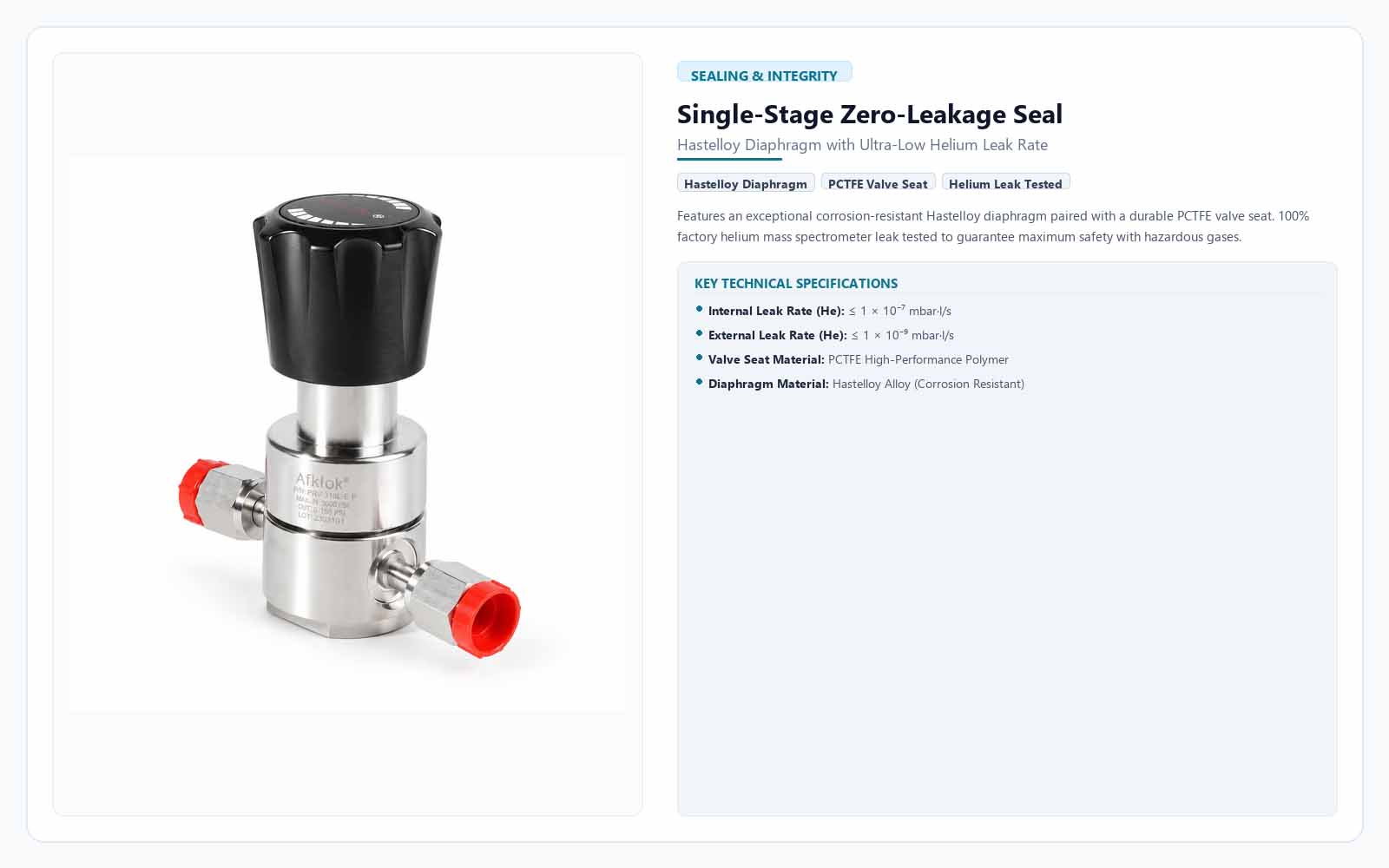
These low leakage rates guarantee that hazardous process gases remain securely sealed inside the fluid pathway while preventing atmospheric oxygen and moisture ingress from contaminating ultra-pure process chemistries.
3.3 Operating Temperature Range and Gas Compatibility
Designed for demanding ambient and process conditions, the WR1000 operates reliably across an extended temperature range of -40°C to +74°C (-40°F to +165°F). This broad thermal window ensures continuous pressure stability in outdoor gas bunkers, heated gas distribution enclosures, and climate-controlled laboratory benches alike. The combination of 316L EP / Hastelloy C-276 metallurgy, Hastelloy diaphragm, and PCTFE seating makes the WR1000 fully compatible with inert gases (N2, Ar, He), combustible gases (H2, CH4), corrosive gases (HCl, NH3, Cl2), and hazardous hydrides (SiH4, PH3).
4. Orifice Configurations, Port Connections, and Dimensions
System packaging requires compact physical dimensions and versatile port arrangements to integrate seamlessly into gas panels, analytical cabinets, and bulk gas distribution skids.
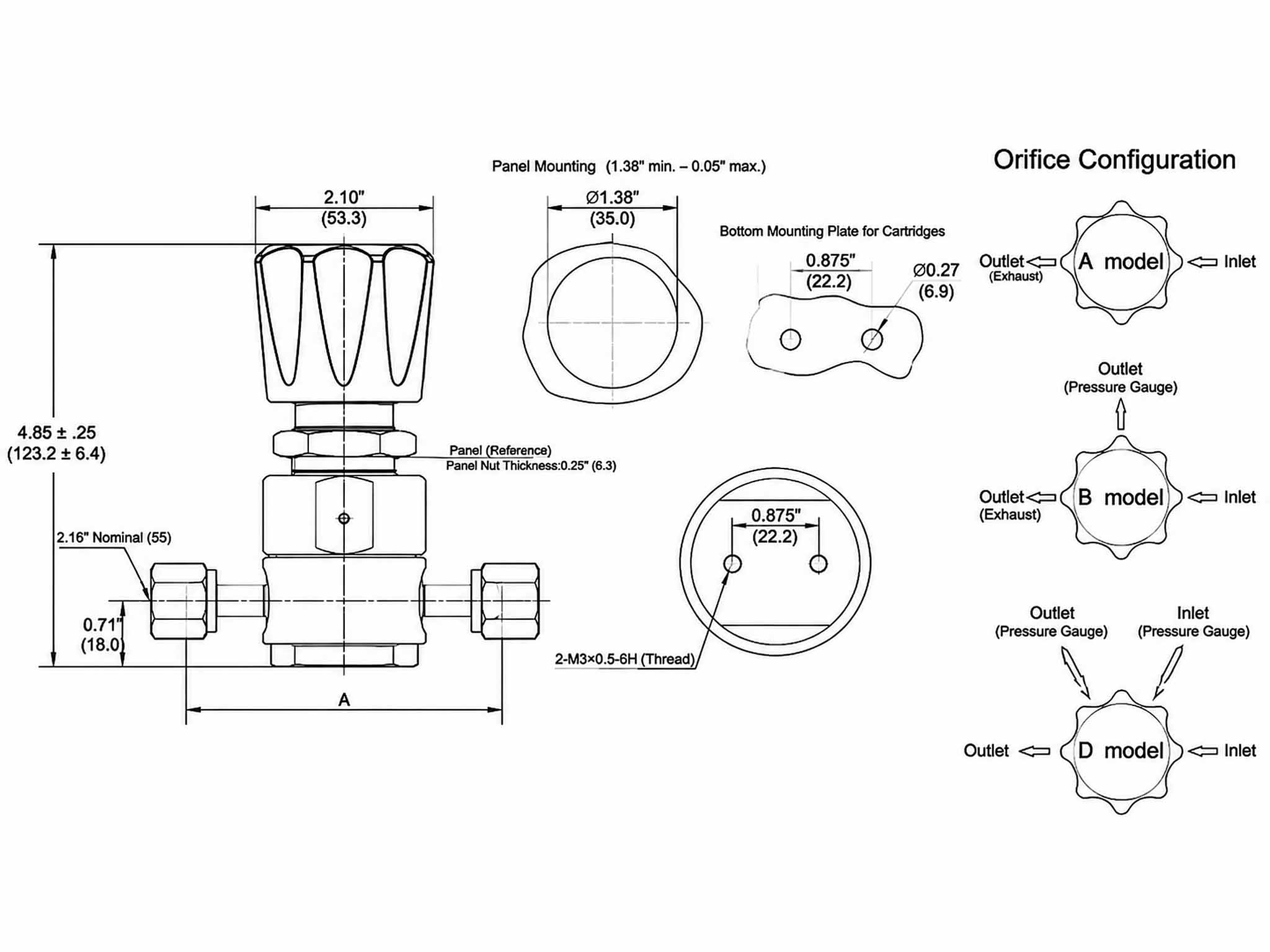
4.1 Porting Geometries: A, B, and D Configurations
To accommodate varied piping schematics, the WR1000 is available in three standard orifice flow arrangements:
- A Model (2-Port): Features 1 inlet and 1 outlet, providing an in-line flow path ideal for basic single-line point-of-use drops.
- B Model (3-Port): Features 1 inlet, 1 primary outlet, and 1 dedicated pressure gauge port, enabling real-time monitoring of delivery pressure.
- D Model (4-Port): Features 2 inlets and 2 outlets, allowing simultaneous high-pressure supply monitoring (inlet gauge) and regulated delivery monitoring (outlet gauge), with optional purge porting.
4.2 End Connections: 1/4" VCR and Tube Butt Weld Options
Connection integrity is maintained via industry-standard face seal and welded fittings:
- Welded 1/4" Female VCR (FR4): The standard face seal configuration ensuring metal-to-metal sealing with zero virtual leaks.
- Rotatable Male VCR (SMR4): Simplifies installation by allowing fitting rotation without twisting adjacent stainless steel tubing.
- Built-in Female VCR (IFR4): Integrated female face seal cavity that shortens overall face-to-face dimensions.
- 1/4" Tube Butt Weld (TW4): Orbital weld stub connections for permanent, zero-leak installations in continuous UHP tubing systems.
4.3 Compact Footprint and Panel Mounting Specifications
The WR1000 boasts a space-saving profile designed for dense panel installations. The overall height ranges between 4.88 inches and 5.35 inches (124 mm to 136 mm), topped with an ergonomic adjustment knob measuring 2.30 inches (58.5 mm) in diameter. For front-panel installations, the cut-out requirement is Ø1.38 inches (35 mm) with a maximum panel thickness of 0.25 inches (6.3 mm), secured via a heavy-duty panel nut (Option Z). Alternatively, base mounting holes spaced at 0.875 inches (22.2 mm) accommodate two M5×0.8-6H threaded fasteners with a 0.22-inch (5.5 mm) cut-out clearance. Face-to-face dimensions (Dimension A) vary between 3.00 inches (76.2 mm) for butt-welded versions and 3.70 inches (94.0 mm) for standard VCR configurations, with a centerline-to-base offset (Dimension B) of 0.75 inches (19.1 mm).
5. Flow Characteristics and Pressure Regulation Dynamics
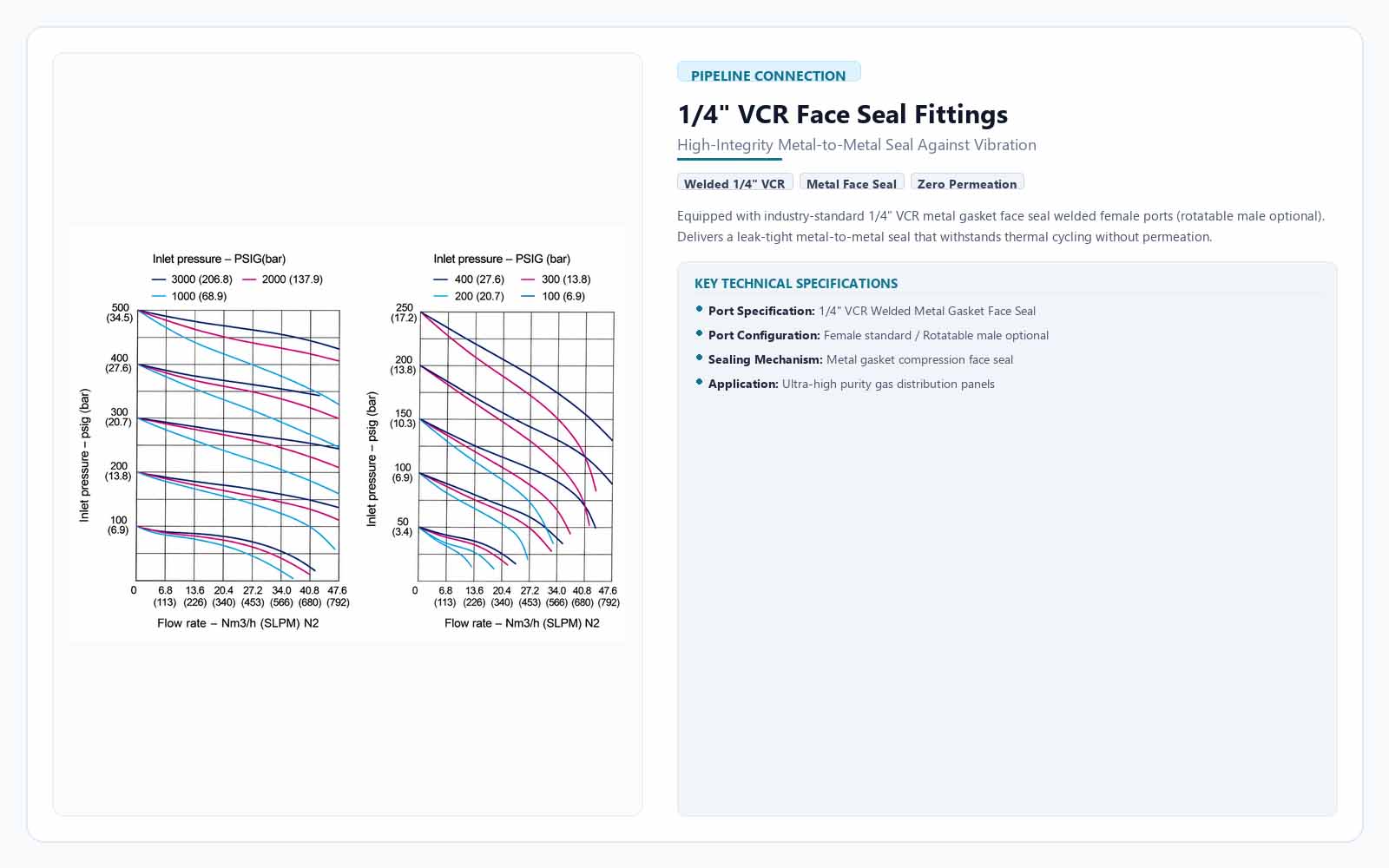
Understanding pressure regulator droop—the natural decline in outlet pressure as flow demand increases—is critical for sizing gas lines correctly. The AFKLOK WR1000 exhibits a very flat flow curve across varied inlet conditions, maintaining tight outlet pressure control from low analytical flow rates up to bulk delivery capacities.
When tested with nitrogen (N2) gas across inlet pressures ranging from 100 psig (6.9 bar) up to 3000 psig (206.8 bar), the WR1000 demonstrates minimal droop across its operational spectrum. At high supply pressures (3000 psig inlet, 500 psig setpoint), the regulator maintains consistent flow rates reaching up to 47.6 Nm³/h, equivalent to 792 SLPM (standard liters per minute). Even under low inlet pressure conditions (e.g., 200 psig to 400 psig inlet), the regulator provides stable delivery pressure up to 250 psig setpoint across 20.4 to 34.0 Nm³/h flow rates.
The single-stage balanced diaphragm design minimizes the "supply pressure effect" (SPE), ensuring that as gas cylinder pressure naturally drops from full charge (3500 psig) down to replacement threshold (100 psig), the outlet delivery pressure does not experience hazardous upward drift. This makes the WR1000 an exceptional choice for unmonitored gas cabinets where consistent pressure is required 24/7.
6. Critical Industry Applications for the WR1000 Regulator
Due to its high chemical resistance, ultra-low particle generation, and certified leak tightness, the WR1000 serves as a benchmark component across advanced industrial sectors.
6.1 Semiconductor and Microelectronics Manufacturing
In wafer fabrication facilities, ultra-high purity process gases such as NF3, WF6, BCl3, and high-purity silane are utilized for chemical vapor deposition (CVD), atomic layer deposition (ALD), and reactive ion etching. The WR1000 regulator is routinely deployed in primary gas delivery boxes (GDB) and gas source cabinets (GSC). Its electropolished internal surface (Ra ≤ 0.25 µm) and zero-dead-zone arc transitions prevent particulate entrapment that could otherwise contaminate sub-nanometer silicon wafers.
6.2 Analytical Laboratories and Gas Chromatography
High-precision analytical instruments such as Gas Chromatographs (GC), Mass Spectrometers (GC-MS), and Inductively Coupled Plasma Mass Spectrometers (ICP-MS) require ultra-stable carrier gas pressures (helium, argon, nitrogen, hydrogen). Any pressure fluctuation or moisture contamination creates baseline noise and calibration drift. The WR1000 provides stable baseline delivery pressure with verified helium leak integrity, ensuring clean carrier gas and reproducible analytical results.
6.3 Photovoltaics, LED, and Specialty Chemical Processing
In the production of high-efficiency solar cells (PERC, TOPCon, Heterojunction) and optoelectronic LEDs via Metal-Organic Chemical Vapor Deposition (MOCVD), pyrophoric and corrosive gases are fed continuously into high-temperature reactor chambers. The WR1000's Hastelloy diaphragm and optional Hastelloy C-276 body deliver robust chemical defense against acidic bypasses, ensuring operator safety and continuous process uptime.
7. Model Selection Guide and Ordering Nomenclature
To order the exact WR1000 configuration for your piping requirements, AFKLOK utilizes a standardized alphanumeric part numbering system. The model designation structure is organized as follows:
WR1000 - [Body Material] - [Inlet Pressure] - [Outlet Pressure] - [Orifice Config] - [Port Types] - [Installation] - [Clean Process]
| Coding Element | Code Option | Description / Specification |
|---|---|---|
| Product Model | WR1000 |
Ultra-High Pressure Reducing Regulator Base Series |
| Body Material | 6L |
316L Stainless Steel (Standard UHP metallurgy) |
HC |
Hastelloy C-276 (Extreme corrosive / acidic service) | |
| Inlet Pressure (P1) | 35 |
3500 PSIG (241.3 bar max inlet, Cv = 0.09) |
06 |
600 PSIG (41.4 bar max inlet, Cv = 0.20) | |
| Outlet Pressure (P2) | 30 |
0 ~ 30 PSIG (0 ~ 2.1 bar delivery) |
60 |
0 ~ 60 PSIG (0 ~ 4.1 bar delivery) | |
100 |
0 ~ 100 PSIG (0 ~ 6.9 bar delivery) | |
150 |
0 ~ 150 PSIG (0 ~ 10.3 bar delivery) | |
250 |
0 ~ 250 PSIG (0 ~ 17.2 bar delivery) | |
| Orifice Configuration | A |
1 Inlet, 1 Outlet (Straight through in-line) |
B |
1 Inlet, 2 Outlets (Includes delivery gauge port) | |
D |
2 Inlets, 2 Outlets (Dual gauge / cross configuration) | |
| Port Types (1, 2, 3, 4) | FR4 |
1/4" Female VCR Face Seal Fitting |
SMR4 |
1/4" Rotatable Male VCR Fitting | |
IFR4 |
1/4" Built-in Female VCR Fitting | |
TW4 |
1/4" Tube Butt Welding Stub | |
M |
Pressure Gauge Attached (Dual Scale PSI/MPa) | |
| Installation | [Blank] |
Standard base mounting (2 × M5 threads) |
Z |
Panel mounting with 1 retaining panel nut | |
| Clean Process | EP |
Ultra-High Purity Electropolished & DI Water Ultrasonic Cleaned |
Standard Configuration Examples:
- WR1000-6L-35-150-AFR4FR4-EP: 316L stainless steel body, 3500 psig inlet, 0~150 psig outlet range, 2-port A configuration with 1/4" female VCR inlet and outlet, electropolished UHP clean process (Dimension A = 3.70 in / 94.0 mm, B = 0.75 in / 19.1 mm).
- WR1000-6L-06-150-BSMR4IFR4IFR4SMR4-EP: 316L body, 600 psig inlet, 0~150 psig outlet, 3-port B configuration with rotatable male VCR and built-in female VCR ports, EP finish.
- WR1000-6L-06-60-BTW4IFR4TW4-EP: 316L body, 600 psig inlet, 0~60 psig outlet, 1/4" tube butt welded inlet/outlet with built-in VCR gauge port (Dimension A = 3.00 in / 76.2 mm).
- WR1000-6L-35-250-DFR4IFR4IFR4-EP: 316L body, 3500 psig inlet, 0~250 psig outlet, 4-port D configuration with high- and low-pressure instrumentation ports.
8. Frequently Asked Questions (FAQ)
What makes the WR1000 suitable for ultra-high purity (UHP) gas delivery?
The WR1000 regulator is engineered with an electropolished internal surface finish of Ra ≤ 0.25 µm (10 µin), a single-stage Hastelloy diaphragm without wetted threads, and an arc channel transition devoid of dead volume. Ultrasonic cleaning with deionized water ensures zero particulate contamination, while certified helium leak rates (external ≤ 1×10⁻⁹ mbar·l/s) prevent atmospheric contamination.
What is the difference between the 600 psig and 3500 psig inlet options?
The 3500 psig inlet option features a flow coefficient of Cv = 0.09, designed for direct high-pressure cylinder supply where tight throttling and safety reduction are essential. The 600 psig inlet option features a larger Cv = 0.20, providing higher volume flow capacity (up to 47.6 Nm³/h N2) for intermediate pipeline and manifold distribution systems.
Can the WR1000 be used with toxic and corrosive gases?
Yes. The WR1000 comes standard with a 316L stainless steel body, Hastelloy diaphragm, and PCTFE seat, making it compatible with most corrosive and toxic gases. For severe acid-forming or halogenated chemistries, an optional Hastelloy C-276 (HC) body is available to deliver maximum resistance against stress corrosion cracking and pitting.
How do I install and mount the WR1000 regulator in a gas cabinet?
The WR1000 supports two mounting configurations: panel mounting through a Ø1.38 in (35 mm) cutout using the optional "Z" panel nut (maximum panel thickness 0.25 in / 6.3 mm), or base mounting via two M5×0.8-6H threaded holes spaced 0.875 inches (22.2 mm) apart. Connection ports support welded 1/4" VCR face seals, rotatable male VCRs, or orbital tube butt welds.